The demand for fresh water around the world continues to grow, while available resources remain limited. Many countries are already facing water shortages, and in the coming years, the pressure on existing resources will only increase. According to UN estimates, by 2050, global water demand will increase by 20–30% compared to the level recorded in the 2019 UN report.
Non-Revenue Water (NRW) includes physical water losses due to leaks and network damage, as well as commercial losses resulting from metering errors and unauthorized consumption.
With the traditional approach, many leaks are detected only after an accident or when a consumer reports a problem. This increases the time required to detect the issue and the volume of water lost.
Smart meters and remote monitoring systems make it possible to obtain consumption data without manual meter reading. Analysing changes in consumption helps identify deviations that may indicate a leak or malfunction and direct attention to the problem area of the network more quickly.
Behind every lost cubic metre are resources that have already been used by the utility: water abstraction and pumping, chemicals for water treatment, operation of pumping equipment and infrastructure maintenance.
Therefore, the actual cost of water losses for a utility can be significantly higher than the water tariff itself. In many cases, it is more beneficial to prevent the loss of water that has already been extracted and treated than to increase production volumes and look for new sources.
That is why reducing NRW is not only a technical but also an economic challenge.
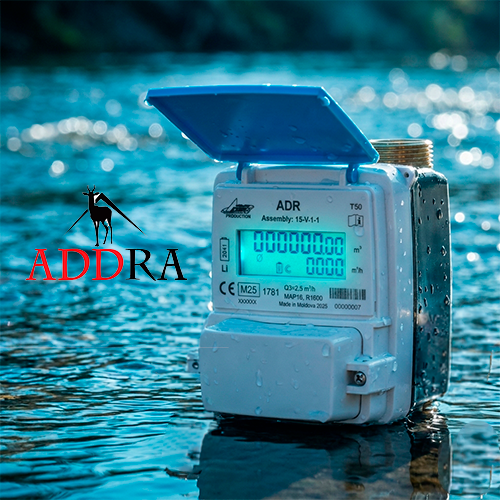
ADDRA makes it possible to monitor consumption dynamically and identify changes in consumption that may remain unnoticed with traditional metering.
At the same time, the source of the problem may not be located only in the municipal network. ADDRA helps identify unusual changes in consumption directly at the consumer’s premises, for example, due to a continuously running toilet cistern, a leaking tap or another hidden leak in the internal water supply system. As a result, the utility receives an additional tool for monitoring losses, while the consumer can learn about the problem before a small leak turns into significant consumption and an unexpectedly high bill.
ADD GRUP’s new development combines meter data with information received from several sensors. This makes it possible to expand the amount of data available for analysis and obtain a more complete picture of the condition of the water supply system.
More information about the new development, its capabilities and operating principle will be presented by ADD GRUP at Enlit Europe 2026 in Vienna.
To arrange a meeting or register at the ADD GRUP stand, please contact us at: info@addgrup.com


