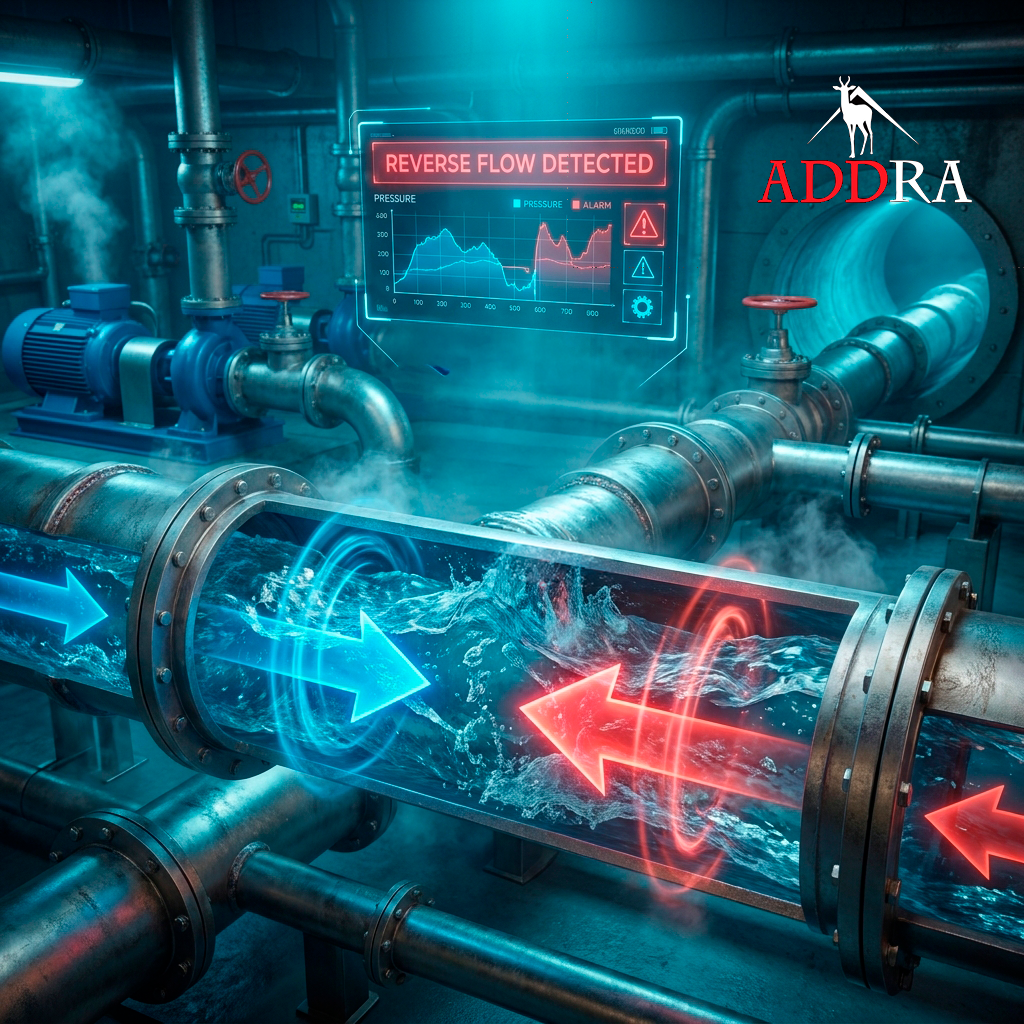
Reverse water flow is not merely a rare technical anomaly, but a systemic issue caused by hydraulic instability. During sudden pressure surges in the network for example, due to accidents, pump station shutdowns, or abrupt changes in water demand a temporary pressure differential may form inside the pipeline, causing the flow direction to reverse. This phenomenon is known as “reverse flow” and is often accompanied by hydraulic shocks.
From an engineering perspective, reverse flow occurs when the pressure on the consumer side exceeds the pressure in the main supply network. This may happen, for example, in systems with local pumps, boiler installations, or in high-rise buildings with uneven load distribution. Under such conditions, water can partially return to the network, potentially carrying contaminants from internal plumbing systems.
One of the key risks is secondary contamination of drinking water. During reverse flow, water from internal systems where impurities, chemicals, or bacteria may be present can enter the centralized water supply network. This poses a serious threat to sanitary safety, particularly in residential areas and facilities with strict water quality requirements, such as hospitals or hotels.
In addition, frequent pressure fluctuations and reverse flows accelerate the wear of pipelines and valves. Hydraulic shocks create additional stress on pipe connections, which can lead to microdamage, leaks, and eventually system failures.
Reverse water flow also directly affects metering accuracy. Traditional mechanical water meters often fail to detect reverse movement or may interpret it incorrectly, resulting in distorted consumption readings. As a consequence, utility providers face commercial losses, while consumers may lose trust in billing accuracy.
With increasing demands for transparency and efficient resource management, such inaccuracies are becoming critical. This is especially relevant for facilities with distributed consumption, including apartment buildings, commercial properties, and the hospitality sector.
Modern ultrasonic metering devices provide new opportunities for monitoring hydraulic processes. Unlike mechanical meters, they are capable of accurately measuring flow in both directions, detecting even short-term changes. This makes it possible not only to identify reverse flow events, but also to analyze their frequency, duration, and possible causes.
Solutions developed by ADD GRUP, including the ADDRA smart water meter range, ensure high measurement accuracy regardless of flow direction thanks to ultrasonic technology. The devices are capable of detecting and recording reverse water flow events within the metering system. This enables utilities to identify pressure instability, analyze network performance, and take possible deviations into account when processing consumption data.
For additional information, please contact us at info@addgrup.com


